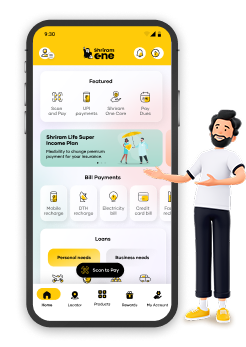
Download Shriram One app
Recent Blogs
.jpg)
How to Switch Payment Mode from Cumulative to Non-Cumulative FD Plan
Fixed Deposits (FDs) are a popular investment tool in India, offering guaranteed returns over a fixed tenure. While a cumulative FD compounds interest and pays it at maturity, a non-cumulative FD provides periodic interest payouts, usually monthly, quarterly, or annually. Switching from a cumulative to a non-cumulative FD plan can help investors manage regular income and cash flow more efficiently.
- fixed-deposit
- 5 mins 22-10-2026

How to Proactively Manage Your Entire Fixed Deposit Portfolio Digitally
Fixed deposits (FDs) are one of the safest and most reliable investment instruments in India. While investing in FDs is simple, managing multiple deposits across banks, interest rates, and maturity periods can be challenging. A proactive approach to managing your entire FD portfolio digitally ensures that you maximize returns, stay organized, and avoid missed opportunities.
- Fixed deposit
- 5 mins 21-10-2026

Importance of NBFC Financial Health When Booking a Corporate Fixed Deposit
Corporate Fixed Deposits (FDs) are a preferred choice for Indian investors seeking higher returns with fixed tenure. However, the financial health of the NBFC issuing the FD is a critical factor that determines the safety of your investment. A well-evaluated NBFC ensures timely interest payouts, principal security, and overall peace of mind for investors.
- fixed deposit
- 5 mins 21-10-2026
What Unique Advantages Make Gold Loans Attractive?
Gold isn't just jewelry for many households; it’s a store of value and a silent financial safety net. When emergencies crop up or opportunities knock, converting idle gold into fast cash can be a lifesaver. That’s why gold loans have grown rapidly in India, especially as people seek quick, secure funds without lengthy waits or complex paperwork.
Imagine this: you need money urgently for your child's education or a medical expense. Traditional loans might take ages, but gold loans offer a way to unlock the value of what you already own. This makes them attractive, trusted, and relevant.
- loans
- 5 mins 23-9-2026
Trending Blogs

How to Migrate Your UPI AutoPay Mandates to a New Phone
You get a new phone, restore your apps from the cloud backup, log back into your UPI app with the same number, and everything looks fine — until the next subscription payment fails, or worse, your SIP mandate quietly stops going through. This catches more people off guard than it should, because UPI AutoPay mandates don’t just “carry over” the way people assume.
- UPI
- 5 MINUTES 5-8-2026

7 Overlooked UPI Settings That Instantly Improve Your Security
Most people set up UPI once, link a bank account, create a PIN, and never open the settings menu again. That’s a mistake, because several of the most useful security controls in UPI apps are tucked away in menus nobody visits after the initial setup. Here are seven worth checking today.
- DIGITAL FINANCE
- 6-8-2026

A Comprehensive Guide to UPI for NRIs Living and Sending Money Abroad
For years, Non-Resident Indians faced a familiar friction point: staying financially connected to family, property, or obligations back home usually meant traditional wire transfers, remittance apps, or asking someone local to handle payments on their behalf. UPI’s extension to NRIs and its growing cross-border reach has changed a meaningful part of that picture.
- UPI
- 5 mins 11-8-2026

Scan the QR code
to download
the app